
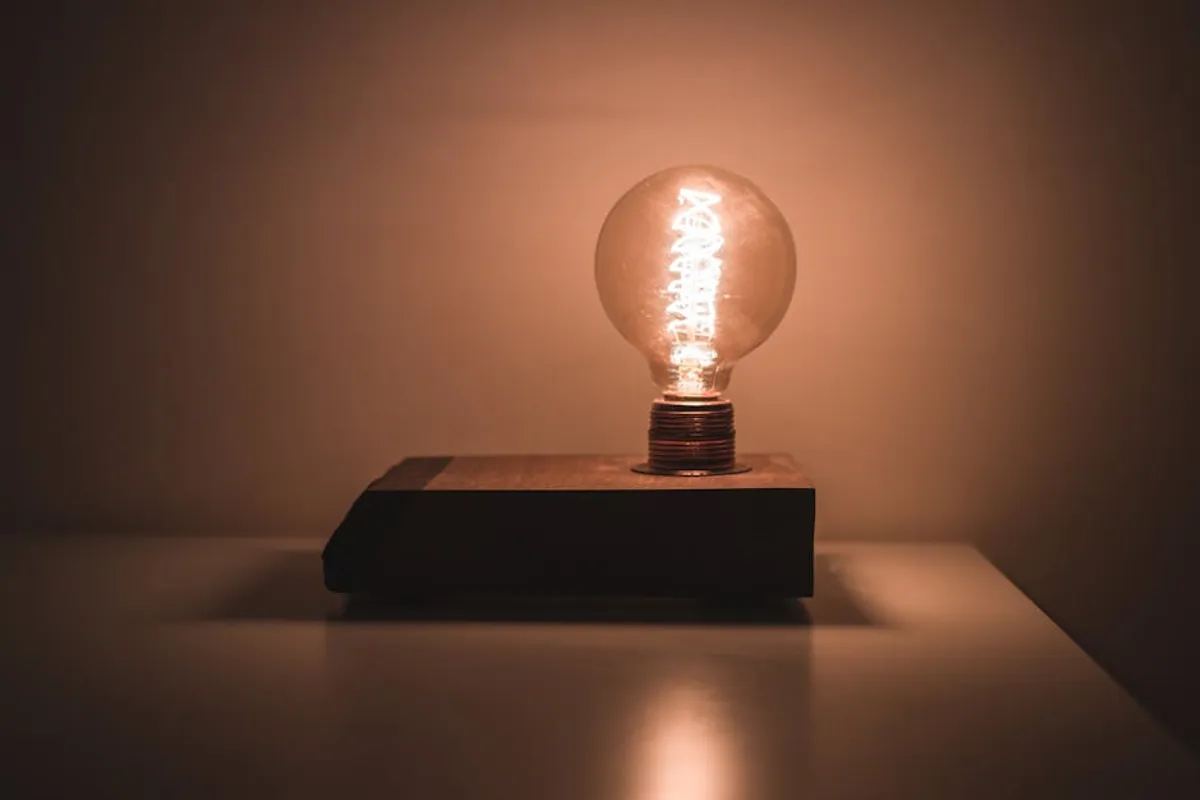
Selecting the right lighting involves more than just illuminating a space; it shapes atmosphere, influences productivity, impacts energy costs, and can significantly enhance or detract from a commercial environment's effectiveness. This guide compares various lighting ideas, focusing on their practical applications and the commercial implications of each choice. Understanding the distinctions between foundational lighting types, light source technologies, and control mechanisms is crucial for making informed decisions that align with specific functional and aesthetic objectives.
Foundational Lighting Types and Their Applications
Ambient Lighting
Ambient lighting provides the primary, general illumination for a space, ensuring basic visibility and a comfortable light level. It often originates from overhead fixtures, offering a uniform spread that minimizes shadows. In commercial settings, effective ambient lighting prevents eye strain, supports general movement, and forms the base layer upon which other lighting types are built. For retail, it ensures customers can navigate aisles comfortably; in offices, it establishes a baseline for task performance.
Best for: General illumination, foundational light layer, overall visibility, creating a sense of openness.
Common fixtures: Recessed lighting, ceiling-mounted fixtures, chandeliers, track lighting with wide-angle beams.
Task Lighting
Task lighting is specifically designed to illuminate a particular area for an activity requiring focused vision, such as reading, working at a desk, or preparing food. It supplements ambient light, reducing glare and shadows that could hinder concentration or precision. The key characteristic of task lighting is its directness and adjustability, allowing users to control the intensity and direction of light precisely where it's needed. In commercial applications, this directly impacts employee efficiency and reduces errors.
Best for: Desks, workstations, kitchen counters, display cases, reading nooks, examination tables.
Common fixtures: Desk lamps, under-cabinet lighting, floor lamps with adjustable heads, pendant lights over specific work surfaces.
Accent Lighting
Accent lighting draws attention to specific objects, architectural features, or areas within a space, adding visual interest and depth. It typically uses a focused beam of light, often three times brighter than the ambient light in the surrounding area, to create contrast and highlight details. This type of lighting is critical in retail for product display, in galleries for artwork, and in hospitality to emphasize design elements, guiding the viewer's eye and enhancing the perceived value of the highlighted item.
Best for: Highlighting artwork, architectural details, product displays, signage, landscaping features.
Common fixtures: Spotlights, track lighting with narrow-angle beams, wall washers, picture lights, uplights.
Key Considerations for Lighting Selection
Light Source Technology
- LED (Light Emitting Diode): Offers superior energy efficiency, significantly longer lifespans (25,000 to 50,000+ hours), and versatile color temperature options. LEDs generate minimal heat, making them suitable for sensitive applications like product displays. Their upfront cost is higher, but operational savings are substantial.
- Fluorescent: Provides good energy efficiency compared to incandescent, with a moderate lifespan. Often used in large commercial spaces like offices or warehouses due to their broad light distribution and lower initial cost. They contain mercury, requiring proper disposal.
- Halogen: A type of incandescent, offering excellent color rendering (CRI close to 100) and a warm, crisp light. Less energy-efficient than LED or fluorescent, with shorter lifespans, but often favored for applications where color accuracy and dimmability are paramount, such as retail spotlights.
Color Temperature (CCT)
Measured in Kelvin (K), color temperature describes the perceived warmth or coolness of light. Lower Kelvin values (2700K-3000K) produce warm white light, similar to incandescent, fostering comfort and relaxation. Mid-range values (3500K-4100K) offer neutral white, suitable for general office or retail environments. Higher values (5000K-6500K) emit cool white or daylight, promoting alertness and task focus, often used in hospitals or industrial settings. Matching CCT to the environment's purpose is crucial for psychological impact and functionality.
Luminous Flux (Lumens) and Wattage
Lumens quantify the total amount of visible light emitted by a source, indicating brightness. Wattage, conversely, measures energy consumption. Modern lighting emphasizes lumens, as a higher wattage no longer directly correlates with brightness, especially with efficient technologies like LED. For commercial spaces, calculating required lumens per square foot ensures adequate illumination without excessive energy use. For example, a typical office might require 30-50 lumens per square foot.
Beam Angle and Directionality
The beam angle dictates how widely light spreads from its source. A narrow beam (e.g., 10-25 degrees) creates a spotlight effect, ideal for accent lighting. A wider beam (e.g., 40-60 degrees) provides a floodlight effect, suitable for general illumination or wall washing. Understanding beam angle allows for precise light placement, minimizing spill and maximizing efficacy for the intended purpose.
Control and Smart Integration
Advanced control systems, including dimmers, occupancy sensors, and smart lighting platforms, offer significant commercial advantages. Dimmers allow adjustment of light intensity, conserving energy and adapting mood. Occupancy sensors automatically turn lights off in unoccupied areas, reducing waste. Smart integration enables scheduling, remote control, and integration with building management systems, optimizing energy use, maintenance, and operational efficiency across large portfolios.
Strategic Lighting for Specific Environments
Office and Workspace Lighting
Effective office lighting combines ambient light for overall brightness with task lighting at individual workstations. The goal is to minimize glare on screens, reduce eye strain, and support sustained concentration. A CCT of 3500K-4000K is often preferred for its neutral balance, promoting alertness without being overly harsh. Dimmable fixtures and individual task lamps empower employees to customize their lighting, improving comfort and productivity.
Retail and Commercial Display Lighting
Retail lighting is strategic, designed to attract customers, highlight merchandise, and create an engaging shopping experience. Accent lighting with high CRI (Color Rendering Index) is paramount to accurately represent product colors. Layering ambient, task (e.g., in fitting rooms), and accent lighting creates visual hierarchy, guiding customers through the store and emphasizing high-margin items. Dynamic lighting, adjustable in color and intensity, can adapt to promotions or seasonal displays.
Hospitality and Residential Ambiance
In hospitality and residential settings, lighting prioritizes comfort, mood, and aesthetic appeal. Layering is essential, using warmer CCTs (2700K-3000K) to create inviting atmospheres. Dimmers are critical for adjusting ambiance throughout the day or for different events. Accent lighting draws attention to decor, while task lighting supports activities like reading. The overall design aims to evoke specific emotional responses and enhance the guest or resident experience.
Pro Tip: When planning commercial lighting, always conduct a lighting audit of existing installations. This identifies areas of inefficiency, insufficient illumination, or excessive energy consumption. A detailed audit provides the baseline data needed to justify investments in new, more efficient, and strategically designed lighting systems, often revealing significant long-term operational savings.
Optimizing Your Lighting Investment
Implementing a well-conceived lighting strategy begins with a clear understanding of the space's primary function and desired atmosphere. Start by defining the required ambient light levels, then identify specific tasks that need dedicated illumination, and finally, determine which features or products warrant accent lighting. Consider the long-term operational costs associated with different light source technologies, factoring in energy consumption, bulb lifespan, and maintenance requirements. Integrate smart controls where feasible to maximize energy efficiency and operational flexibility. Regularly review and adjust lighting schemes to adapt to changing needs or technological advancements.
FAQ
What is the most energy-efficient lighting option for commercial use?
LED lighting is currently the most energy-efficient option, consuming significantly less power than traditional incandescent or fluorescent bulbs while offering longer lifespans and lower maintenance costs.
How do I choose the right color temperature for my space?
Choose warm white (2700K-3000K) for relaxed, inviting environments like restaurants or lounges. Opt for neutral white (3500K-4100K) for general offices or retail. Use cool white or daylight (5000K-6500K) for task-intensive areas or industrial settings where alertness is key.
Can smart lighting systems genuinely save money?
Yes, smart lighting systems can lead to substantial savings. Features like occupancy sensors, daylight harvesting, scheduling, and remote management reduce energy consumption by ensuring lights are only on when and where needed, and at appropriate intensities.
What is CRI, and why does it matter in commercial lighting?
CRI (Color Rendering Index) measures how accurately a light source reveals the true colors of objects compared to natural daylight. A high CRI (90+) is crucial in retail, art galleries, and other environments where accurate color representation of products or displays is critical for customer perception and sales.