Home libraries are spaces that develop across decades. Unlike most interior spaces, which are designed and then occupied largely as designed, libraries grow continuously through the slow accumulation of books across years of reading life.
The result, in households that maintain and develop libraries over substantial time, is interior spaces unlike any other. The spaces hold not just objects but the accumulated reading life of the occupants. They function as both functional storage and as accumulated personal record.
The slow practice of building a library deserves attention because it produces specific kinds of interior space and specific kinds of life within those spaces. The practice is older than most contemporary interior approaches and remains relevant in ways that warrant examination.
What a personal library actually is
A personal library is more than book storage. It includes:
The books themselves. Substantive collection accumulated through years of reading. Not all owned books — some books read once and discarded, some books referenced occasionally and retained, some books returned to repeatedly across years.
The shelving infrastructure. Built-in or freestanding shelving substantial enough to hold substantial books. Quality shelving lasts decades; cheap shelving sags or fails.
The reading furniture. Chairs, lights, side tables that support actual reading rather than just looking at books. Reading is the library's primary purpose.
The supporting elements. Adequate light, comfortable temperature, appropriate quiet. Libraries support sustained attention; environments hostile to attention undermine the function.
The organization. Whatever scheme makes the books findable. Personal libraries can use various organizational approaches but need some approach.
The integrated assembly of these elements produces a library — distinct from a room with bookshelves.
How libraries develop across years
Libraries develop through specific patterns:
Accumulation phase. Books accumulate faster than they're shelved. Stacks form. The accumulation reflects current reading interests.
Sorting phase. Periodic reviews identify which books to keep, which to give away, which to organize where. Most books that pass through homes don't merit long-term retention.
Organization phase. Retained books get organized by whatever scheme works for the household. Schemes evolve as collections grow.
Access phase. Books in the organized collection get used — referenced, re-read, lent to friends, recommended. The use is the point.
Maturation phase. Across years, the collection takes on character that reflects the household's sustained reading interests rather than current reading.
The phases overlap continuously. Mature libraries are simultaneously in all phases as new books arrive while old books are reviewed and organized.
The shelving question
Shelving is foundational to library development:
Built-in shelving integrates with architecture. Substantial visual presence and structural permanence. Limited flexibility but maximum density.
Quality freestanding shelving can move with the household but produces less integrated effect. Specific manufacturers (USM, IKEA Billy at the budget end, various studio makers at premium) cover most needs.
Custom shelving from cabinetmakers offers maximum integration with specific spaces. Substantial cost but produces results that off-the-shelf options can't.
Cheap shelving becomes problematic at scale. Sags under book weight. Looks tired quickly. Requires replacement.
For substantial libraries, quality shelving justifies its cost through decades of use. For modest libraries, cheaper alternatives may be adequate.
The architecture of library spaces
Substantial library spaces share architectural properties:
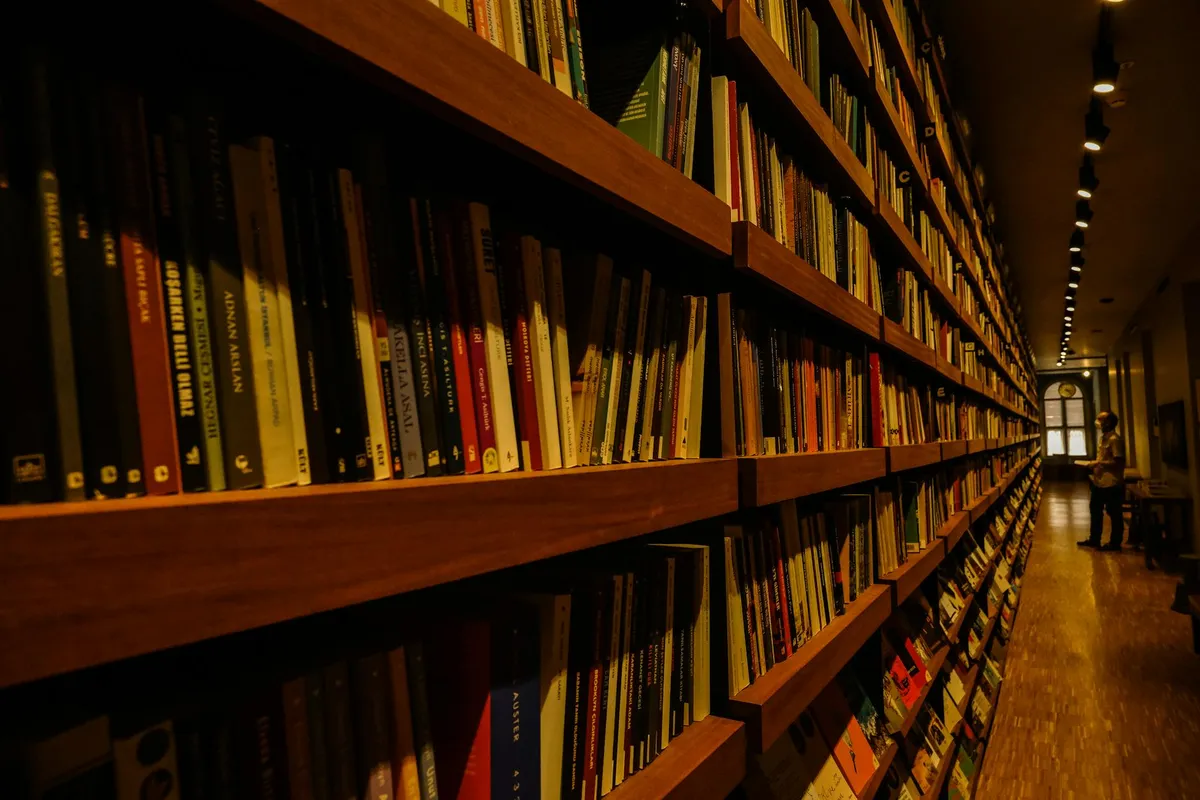
Wall-coverage shelving. Substantial libraries occupy substantial wall space. Half-height shelving rarely accommodates real collections.
Reading positions. Multiple seating positions support different reading patterns — the reading chair, the desk, the comfortable lounging position.
Adequate lighting. Both ambient (general space) and task (focused reading). Good libraries have both.
Surface space. Tables and surfaces near reading positions for current books, notebooks, beverages.
Specific climate considerations. Books prefer moderate humidity and temperature. Spaces hostile to books (damp basements, hot attics) make poor libraries.
Quiet location. Libraries support concentration. Spaces near noisy household activity often undermine library function.
The architectural considerations differ from most other rooms.
The role of physical books
The contemporary library question intersects with the e-reader question:
Physical books and digital books serve different functions even when they contain the same text.
Physical libraries provide visible accumulation of reading life. Digital libraries don't produce equivalent visible record.
Physical books support specific reading practices (note-taking, browsing, lending, gifting) that digital books support differently or not at all.
Digital books support specific advantages (portability, searchability, annotation accessibility) that physical books don't.
Most serious readers maintain both. The physical library coexists with digital reading rather than replacing it.
Library development doesn't require eliminating digital reading. It requires maintaining the physical collection that does what physical books do specifically.
What books to keep
The selection of which books to keep is part of library development:
Books worth re-reading. The books that support multiple readings across years. Different from books read once and shelved.
Reference books. Books referenced periodically rather than read straight through. Dictionaries, atlases, technical references, art and design books.
Books with personal significance. Books connected to specific moments or relationships. The personal connection justifies retention regardless of objective merit.
Books worth lending. Books that can be shared with friends and family. The lending function is part of library value.
Books that look right together. Aesthetic considerations are part of library development. Books selected partly for visual cohesion produce better-looking libraries.
Not all books deserve permanent retention. The discipline of curating the collection improves it.
Organization approaches
Personal libraries can use various organizational approaches:
Library of Congress system. Formal but rigorous. Appropriate for very substantial libraries. Often overkill for typical home libraries.
Dewey Decimal System. Similar to LC but with different categorization. Same considerations.
Alphabetical by author. Simple and findable. Doesn't group related works together but reliably locates specific titles.
By subject. Groups related books together. Requires personal judgment about which subjects each book belongs to.
By size. Visually pleasing but functionally limited.
By color. Aesthetically driven. Functional limitations are substantial.
Personal hybrid systems. Most home libraries use idiosyncratic combinations that work for the specific owner.
The right system is whatever works for the specific library and reader.
Library furniture beyond shelving
Beyond shelving, libraries include specific furniture:
The reading chair. Substantial, comfortable for sustained occupation, with appropriate lighting positioning.
Side tables. Adjacent to seating. Hold current books, notes, beverages, lights.
Reading lights. Quality task lighting positioned for actual reading rather than ambient illumination.
Desks. If the library serves writing or research function, an appropriate desk.
Library ladders. If shelving extends to high reaches, the means to access upper shelves.
Display elements. Surfaces or shelves for showing currently-active books, art, or other elements.
Each furniture category has specific quality considerations.
The relationship between library and home
Libraries can be:
Dedicated rooms. Substantial homes can dedicate specific rooms to library use. Maximum integration of library function.
Living room integration. Most homes integrate library into living spaces. Books along walls, reading furniture mixed with other furniture.
Hall and corridor libraries. Some homes use circulation spaces for library shelving. Functional and visually distinctive.
Whole-house libraries. Some homes have books distributed throughout. Less concentrated but more accessible.
The right approach depends on home size, available space, and household reading patterns.
Building libraries on budgets
Library development can occur on various budgets:
Used and remainder books offer substantial collection-building economics. Most quality books circulate widely in used markets.
Library sales offer specific opportunities for serious collection building.
Inexpensive shelving (IKEA Billy) handles substantial collections capably.
Reading chairs can be acquired vintage for fraction of new prices.
Book lights and reading lamps don't require premium pricing for adequate function.
Substantial libraries can develop on modest budgets through patience and attention to value.
The reading life that libraries support
Libraries are infrastructure for reading life. The reading life that libraries support has specific properties:
Sustained attention. Libraries support sustained reading attention better than other contexts. The accumulated environment cues focused reading.
Re-reading. Libraries make re-reading possible. Books staying available for years allow returns to past readings.
Cross-referencing. Libraries support reading across multiple books simultaneously. The physical library makes such reading easier than purely digital reading.
Memory and association. Books accumulate associations with their readers. The library holds these associations in physical form.
Future engagement. Libraries hold books for future engagement. The library becomes a record of intentions about what to read someday.
The reading life that libraries support is different in character from reading without library infrastructure.
Libraries across generations
Libraries can be passed across generations:
Inherited libraries often have specific character that reflects the original owner's reading life.
The continuation of library development across generations creates substantial collections that no single lifetime could produce.
Specific books connect generations through shared reading.
The disposition of inherited libraries (kept, dispersed, donated) involves substantial decisions about cultural and personal heritage.
Inherited libraries can substantially enrich subsequent generations' reading lives.
The intergenerational dimension is one of the deeper aspects of library development.
What libraries reveal about households
A household's library reveals substantial things about the household:
The subjects represented show what the household has cared about across time.
The level of organization shows attention and discipline.
The condition of the books shows whether they've been read or just collected.
The reading furniture's use shows whether reading happens or not.
The presence of books from across decades shows continuity of reading life.
The library is one of the more revealing rooms in any home.
Building a library now
For households interested in developing libraries:
Start with shelving adequate for current and near-future needs. Plan for expansion.
Acquire reading furniture that supports actual reading. The chair matters as much as the books.
Develop sustained reading practice. The library is infrastructure for reading; without reading it's just shelves.
Curate the collection. Not all books deserve retention. Periodic review improves quality.
Plan for long time horizons. Libraries develop across decades. Patient development produces better results than rapid accumulation.
Accept that taste evolves. Books that mattered earlier may not matter later. The collection should reflect current values rather than past commitments.
A closing observation
Personal libraries are spaces that develop slowly and persist across substantial time scales. They represent reading lives more substantially than nearly any other physical artifact.
For households that maintain reading practices, the library is foundational interior infrastructure. The space supports the reading; the reading enriches occupation of the space; the cumulative effect is interior life of substantial quality.
The slow practice of building a library is older than contemporary interior design and remains relevant. The practice produces results that contemporary design approaches typically don't replicate.
For practitioners, library spaces deserve specific design attention different from other living spaces. The functional requirements differ. The aesthetic possibilities differ. The temporal expectations differ.
For homeowners, library development is a worthwhile long-term project. The investment pays back across all years of subsequent reading life. The infrastructure supports reading practice that without it would be more difficult.
The books accumulate. The shelving holds them. The reading furniture supports actual reading. The library develops, in the slow way that libraries have always developed, across the years of reading life that produced it.
The work of building a library continues, where it continues, because some practitioners and homeowners find substantial value in the kind of space that holds reading life and supports the sustained attention reading requires.
The shelves fill. The books stay. The library develops, in the long quiet rhythm by which households build libraries that hold what households read across the decades that they read it.